

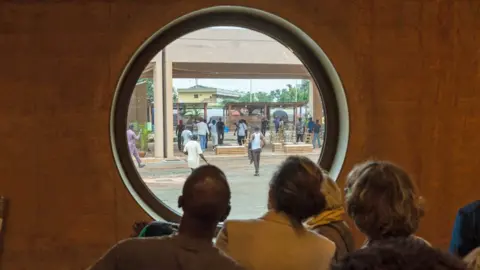
The nation's impressive new Art Museum of West Africa (Mowaa) has landed in the crosshairs of local power politics during the period it was scheduled to – but was unable – to welcome visitors to the general public for the very first time.
The Grand Vision
The large-scale complex sits in the core of Benin's urban center, capital of the southern area of Edo – and contains an historical dig and buildings created by celebrated dual heritage architect Sir David Adjaye, particularly noted for the National Museum of African American History and Culture that was inaugurated in Washington DC in 2016.
It has been five years in the development – and is designed to celebrate both the history and the present of cultural innovation in the area renowned for the Benin Bronzes, historical pieces taken from the royal palace by British troops in the 19th Century.
Readiness and Potential
It is remarkable – and before the anticipated opening, Mowaa was energetic with employees committed to show it is a place that can compete with well-known museums and galleries in the Europe and America.
Inside art restorers precisely unwrapped cultural items from secure wrapping, inspecting each artifact and taking thorough records before arranging them on exhibition areas and plinths.
Specialists calibrated temperature regulation systems. In the scientific facility, staff members adjusted equipment designed to maintain centuries-old objects.
Financial Backing and Economic Vision
The project has been the idea of investor Phillip Ihenacho – presently Mowaa's managing director.
"I hope us to have a substantial economic impact on area populations in this region," he told journalists, noting that he hoped to make this urban center "a cultural destination."
Mowaa, a non-profit national foundation, envisions itself creating over 30,000 work positions and contributing above $80m each year to the regional creative economy through partnerships and events.
Funding Sources and Political Challenges
It has needed $25m to reach this point – funds raised from various donors, including the international partners, the London institution and the regional authorities.
But at present the local government has revoked permission from below it – terminating the occupancy of the land on which the building was erected.
An official representative stated this was because in the early agreements it had called itself EMOWAA – and it had subsequently removed "the regional name" from its designation.
Protests and Political Intervention
This announcement came after rallies on the weekend, when people invaded the facility calling for it be named the Royal Benin Museum.
A disruptive group confronted overseas dignitaries at the venue prior to the opening – requiring them to be quickly removed under official guard.
President Bola Tinubu has even stepped in to try and resolve the conflict, setting up a special task force to manage the situation.
Administrative Challenges
But in what way has this turned into so politicised – and such a PR disaster?
The majority of it stems from internecine rivalries at a regional government level, as it was the former state leader Godwin Obaseki – whose administration ended the previous year – who was a primary advocate of the initiative.
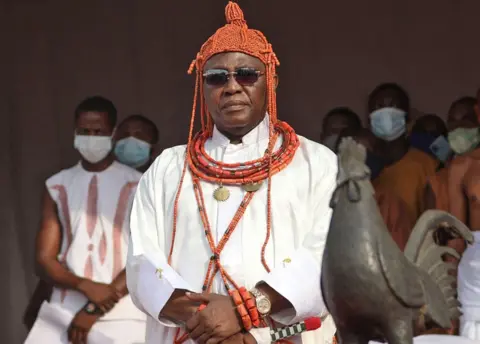
And it seems the government of the new governor, a strong supporter of the local traditional ruler, referred to as the traditional leader, may seek greater involvement in the project. The demonstrators on the weekend, for instance, were calling for that the museum be positioned under the authority of Oba Ewuare II.
The Benin Bronzes Controversy
This brings into focus the disputed topic of the cultural artifacts, one of the continent's most famous historical legacy.
Because even if the facility does eventually open, these bronzes will be clearly not present.
They are metal, ivory and timber carvings that once adorned the royal palace of the Benin Kingdom before colonial troops stole them in the colonial era during a punitive expedition.
Currently, thousands continue to be distributed across galleries in Europe and North America -- featuring the British Museum, European center and the Metropolitan Museum of Art.
Return Initiatives
Their homecoming has become one of the most contested discussions in the international art community. Roughly 150 have currently made their way home – and more are due to follow.
When proposals for the facility in the urban center were first announced in recent years, the key players on the country's cultural sector expected it would become their perfect venue – a advanced campus to exhibit them to the international community.
But the waters were muddied recently after the federal government stated that the Oba would be the rightful owner of any returned bronzes – and the monarch's court advocated for a museum under the king's authority, contrary to the preferences of the ex-leader.
Diplomatic Challenges
This placed Mowaa in a delicate position: asserting a definite position on repatriation while staying tactful on custodianship – and stressing its larger purpose, which led to|c


